The Swiss AI Paradox: Why 89% Daily Adoption is Creating a Sovereign Governance Challenge

Artificial intelligence is no longer an experimental field in Switzerland; it has become a standard workplace utility. According to new data published by the Swiss Federal Portal for SMEs (KMU.admin.ch), 89% of employees in Swiss companies now use AI tools on a daily basis.
However, beneath this impressive stat lies a complex operational reality for business leaders, managing partners, and board members across the country.
While 55% of organizations have deployed AI strategically in at least one area, the vast majority of companies are navigating a glaring paradox: employee adoption is moving significantly faster than corporate governance.
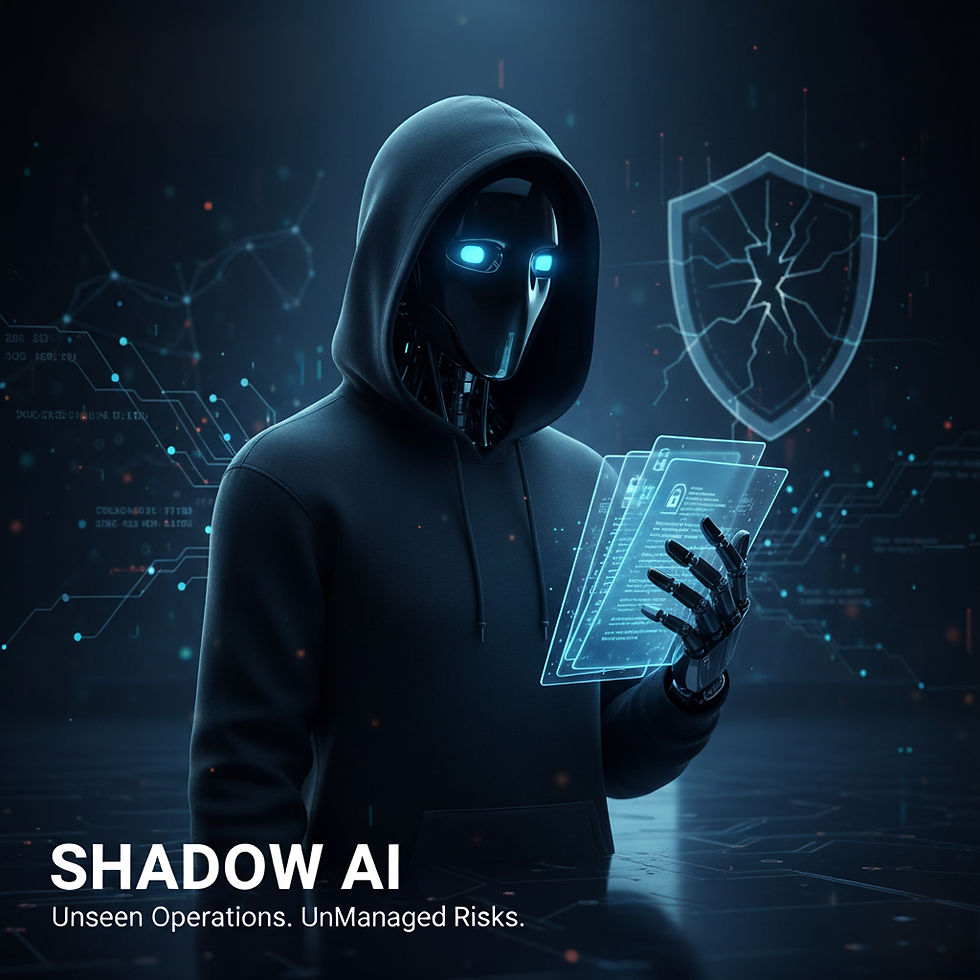
1. The "Shadow AI" Reality: 29% on Personal Accounts
One of the most eye-opening findings in the study is that nearly one-third (29%) of employees report using AI for company work through their personal accounts.
When an employee pastes a client transcript, a contract draft, or a financial summary into a personal AI chatbot to save two hours of administrative work, they aren't trying to harm the company. They are trying to be efficient...
However, from a legal and structural perspective, this creates an unmonitored "Shadow IT" pipeline. Under the revised Swiss Data Protection Act (nLPD), inputting sensitive data or personal information into unmanaged, external commercial tools creates immediate compliance liabilities and jurisdictional exposure.
2. Data Sovereignty as a Core Requirement
Swiss business leaders are acutely aware of these risks. The survey highlights that 51% of respondents consider Data Sovereignty a major concern, insisting that AI systems must fully comply with Swiss or European data protection standards. Furthermore, security and data protection concerns were cited by 19% of companies as the primary barrier preventing them from scaling AI further.
This creates a clear dilemma for Swiss PMEs:
Option A: Ban AI entirely. (Only 3% of Swiss companies attempt this, and it inevitably forces employees to use personal devices surreptitiously).
Option B: Accept public cloud tools. (Exposing intellectual property to foreign jurisdiction and third-party model training).
Option C: Provide a Sovereign Infrastructure. (Giving employees the productivity tools they crave within an architecturally isolated environment).
3. Moving from Pilot Phase to Architectural Security
With 31% of Swiss companies still stuck in the pilot phase, the path forward isn't about buying more complex software or writing lengthy employee policy manuals that nobody reads.
It is about Infrastructure as Governance.
To bridge the gap between employee enthusiasm and enterprise security, organizations need to provide their teams with local, private AI workspaces. When employees have access to an internal tool that performs summarization, drafting, and research, without sending prompts to third-party public clouds or foreign servers: Shadow IT disappears overnight.
The Takeaway for Swiss Leaders
The question for Swiss executives in 2026 is no longer "Should we adopt AI?" Your employees have already answered that with an 89% daily usage rate.
The real question is: "Are they doing it on an infrastructure that protects your firm's secret sauce?"
Building an environment where data sovereignty and daily productivity coexist isn't just an IT upgrade, it’s the foundation of modern Swiss risk management.
Copyright (c) 2026 OCIM Cybersécurité Informatique. All rights reserved.